
Fun and whimsy are back. “Little treat culture,” rewarding yourself with little indulgences, means trinkets on our shelves and bag charms everywhere. It means people yearning for the 2000s and 2010s when everything felt a bit less serious, less documented on social media and more silly brand moments. It's why mascots are back in rotation, just like babydoll tops and glittery makeup.
Mascots have slowly been creeping back into mainstream marketing campaigns, but nothing has made quite as big a splash as Apple’s new mascot. As part of the company’s rollout of its new MacBook Neo computers, Apple quietly added in a mascot that the internet has decided to dub the “little Finder guy.”

The internet immediately fell in love with the little fella, with Reddit co-founder Alexis Ohanian even tweeting that he approved of him. (Since 2005, Reddit has had a mascot: an alien named Snoo.) Little Finder guy is part of Apple’s new marketing strategy for the MacBook Neo that’s slightly unhinged but getting people’s attention (for better or for worse).
The little Finder guy works because it feels remarkably different from anything Apple has done in a while. No one ever looks at the current Apple lineup and thinks “aw, cute,” but we did back in the day with the iMac G3 and even the iPod sock.
Traces of the mascot comeback have been peppered in before the Finder guy. In 2023, Pop-Tarts unveiled an edible mascot for the Pop-Tarts Bowl, a campaign that won a Grand Prix at Cannes Lions in 2024. Since then, the company has doubled down, introducing six edible mascots at last year’s bowl, along with a dedicated mascot camera.
The Guinness Toucan returned as part of a campaign in 2024. BARK, the dog toys and treats company, released cereal-inspired treats for dogs that came with mascots. Think Lucky McDuck, a little duck to go with “Lucky Duckies,” or a Goober B Nutty, a small peanut that’s part of the “Go Nuttys” cereal. (BARK is a Catamaran client.)

Last year, NASA asked the public to help it design a moon mascot for its Artemis II mission. Even The Minnesota Star Tribune, a newspaper, unveiled a gray duck mascot named Stribby in 2024.
The popular self-care app Finch has a little gray bird dubbed “Finchie” that has become its mascot, complete with a backstory. He appears all across the company’s social media, the app and its merch.
No mention of mascots can be made without a reference to the return of McDonald’s iconic mascots, most notably Grimace. Last year, McDonald’s even brought back Uncle O’Grimacey, Grimace’s Irish uncle, to promote the Shamrock Shake. Naturally, limited edition merch was made and sold to go along with the rollout.
Various AI companies are investing in their own mascots to go with their products. In this case, it’s a way of humanizing a technology that’s difficult to explain and that many people remain skeptical of.
This doesn’t mean every company should come out with a mascot just to see if cuteness can attract more customers and sales. But if done in a fun, clever way, it creates that thing we all love to talk about—brand loyalty.
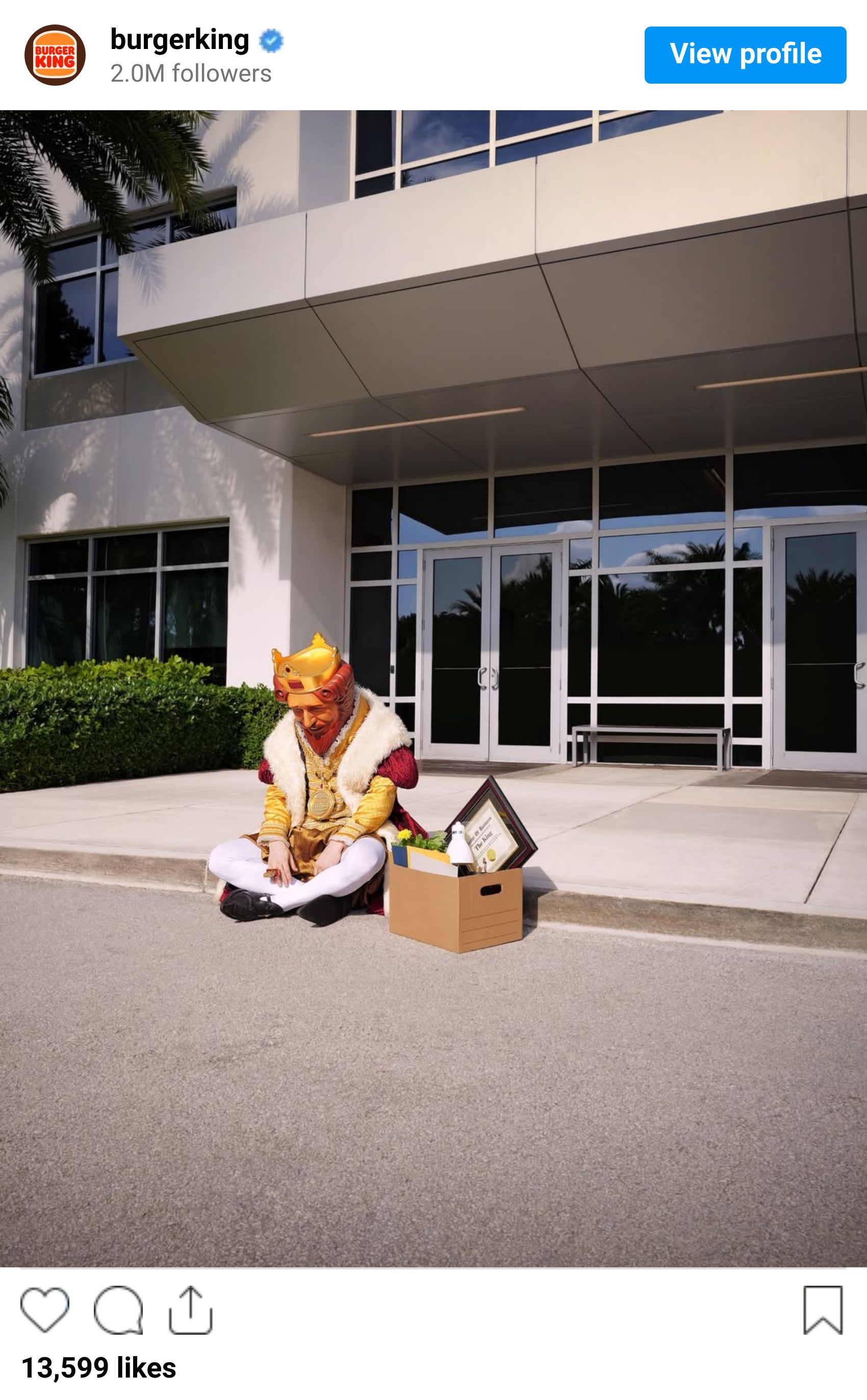
Mascots can also go away and serve as a “marketing moment.” During this year’s Oscars, Burger King aired an ad in which the company fired its plasticky, King mascot that’s been around for more than twenty years. The ad is part of a new campaign from the burger chain centered around its customers. Duolingo also famously killed its mascot, Duo the owl, in February 2025 (he was resurrected two weeks later).
Consumers are more fickle than ever, and gaining their loyalty requires more than a good purchase experience. About 40% of a brand’s value is more than its price, says Deloitte research. And 33% of consumers say visually appealing content is one of the most engaging brand touchpoints for them, according to Adobe research.
A mascot is a small touch that presents a brand differently. It can show up on social, IRL, really anywhere. Are we in a mascot renaissance? I hope not, because then it means companies are doing it to simply do it, as opposed to having a strategy. But I like to think we’re back in a world that needs a little whimsy, and the right brands will find ways to make mascots part of that.
If Penguin Random House can make its 90-year-old penguin start to dance and jump, there’s nothing stopping others from anthropomorphizing their own logos.

Was this email forwarded to you? Subscribe to The Zeitgeist by Catamaran here.
