
We’ve all seen it (or maybe posted it): those quirky, relatable quick tidbits from brands commenting on an everyday civilian’s post, a caption typed in lowercase (a trait I’m also guilty of), or a reference to a cultural moment. Sometimes there’s a GIF involved.
But what used to be seen as a super-relatable moment is now possibly at an oversaturation point. It’s still fun to see brands post on the internet as if they’re humans themselves, but these days, consumers want to hear from everyday employees—or even the CEO—rather than the company’s social team.
There are a few recent examples of this phenomenon. The first comes from … Staples? Yes, the company known for its Easy Button and office supplies has picked up steam on TikTok, thanks to the “Staples Baddie.” The nickname is for an employee named Kaeden Rowland who started posting in January about all the things you could do at Staples: business cards, passport photos, printing anything … the list goes on, and Rowland will let you know about it.
@blivxx We do mugs and travel cups TAP INNNN
Rowland’s TikToks took off, with one video about how to create a personalized mug leading to 4.2 million views on TikTok. Staples noticed, with the CMO telling Fast Company it’s “exploring opportunities to collaborate.”
And Rowland tells CNN, she has no formal marketing training. “I’m just opinionated with cheekbones.”
What made the Staples Baddie so relatable and fun? She was authentic. We hear it a million times in marketing land, but this is a clear example of what that word means in practice. She sets up her phone, films, walks around the store in her red T-shirt and responds to people in the comments as a normal, everyday person. There’s no script, no ring light (just the blaring overhead lights at Staples), and it certainly doesn't feel like she’s working with legal, marketing and comms teams to create her content.
The Staples Baddie isn’t the first (nor the last) employee to show appreciation for where they work that turns into a viral moment. Ann from Walmart is another viral sensation who works at a store in Ashland, Kentucky, and continuously wins the hearts of people on social media for simply advertising products on the company’s local Facebook page. There are the pizza workers who post videos of spinning pizza dough to viral music, sometimes even with their eyes closed.
The tide has shifted. Hiring someone to be the face of your company on social media isn’t enough. You need your everyday employees to post organically as well to show there’s more to the brand than corp-speak.
It’s not just minimum-wage workers trying to talk to customers, either.
Burger King recently invited customers to call or text its president, Tom Curtis, with unfiltered feedback. Days later, Curtis seemed to take a playful jab at McDonald’s CEO Chris Kempczinski, with BK posting a video of Curtis taking an unapologetically large bite of a Whopper—an apparent contrast to Kempczinski’s Big Arch taste test, which was roasted online as “the smallest first bite I’ve ever seen.”
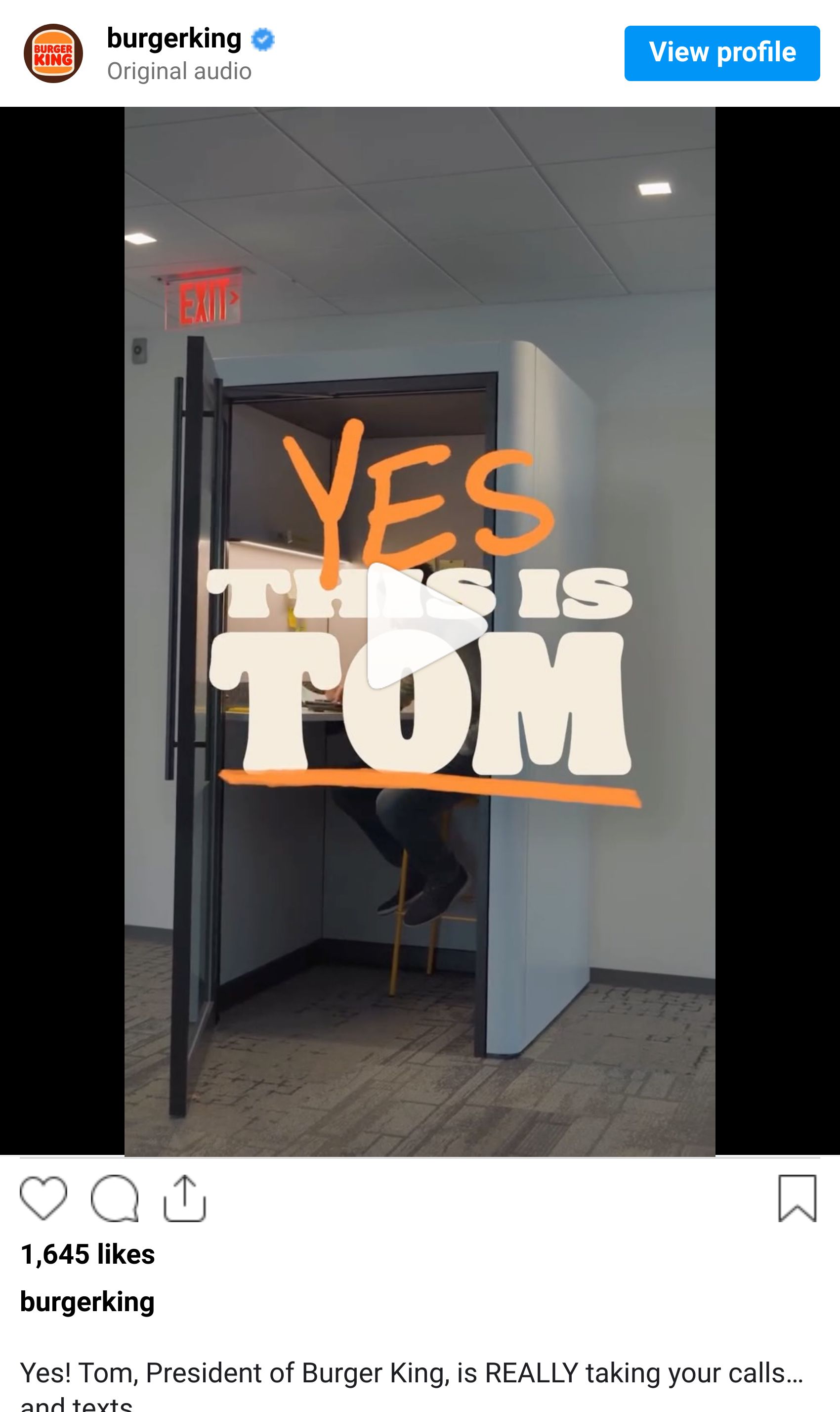
These posts are most likely vetted and edited before being posted, but they still appear as if the executive put their phone on a tripod or Octobuddy and hit record (with no millennial pause).
Of course, these are the nice, cheery examples. There are risks to letting employees post their own content: employees can show a peek behind the curtain they shouldn’t have, and the employer can shut down the content mill.
So yes, we’re back at the usual conundrum that everything has a risk: some will win, some will fail, yada, yada. But it’s clear that employee content is working. When consumers will get tired of it is a question I’m sure we’ll see answered in real time in a few months. For now, go forth, Staples Baddie, and find me there next week recycling batteries and printing something!

Was this email forwarded to you? Subscribe to The Zeitgeist by Catamaran here.
